Osun State: The Circus That Has Failed to Be Liberated from a Jester By Kamal Rahman


Let me begin by commending President Bola Ahmed Tinubu for allowing the people of Osun State to exercise their democratic rights and determine who governs them. In a country where the credibility of elections has repeatedly been called into question, ensuring that people can freely express their will at the ballot box is worthy of recognition. For a man whose political journey has been deeply connected to Nigeria’s democratic struggle, the conduct of the Osun election further reinforces the argument that Tinubu is indeed a father of democracy.


The people of Osun have spoken, and their decision must be respected. Governor Ademola Adeleke has secured another four years in office, and congratulations are therefore in order. But beyond the celebration, the music and the familiar dance steps, there is a more serious conversation that Osun must have with itself.


Osun State is the circus that has failed to be liberated from a jester.


That may sound harsh, but sometimes the truth about a society must be expressed without the comfort of political correctness. Osun is a state blessed with intellectuals, academics, professionals, technocrats, entrepreneurs, and young people with the capacity to build a modern and economically vibrant society. Yet, somehow, our politics continues to revolve excessively around personalities, theatrics, and political entertainment rather than ideas, competence, and long-term development.


There is absolutely nothing wrong with a governor who dances. Governor Adeleke has every right to celebrate, enjoy himself, and connect with the people in whatever manner he chooses. His dancing has become part of his political identity, and there is no need to pretend otherwise. But governance cannot be measured by the ability to entertain a crowd. A governor may dance for five minutes, but the people will live with the consequences of his policies for four years.


Osun cannot dance its way out of unemployment. It cannot dance its way out of poor healthcare. It cannot dance quality education into its schools. It cannot dance industries into the state or create sustainable economic opportunities for its young people.


The people deserve more than entertainment. They deserve governance.


The Adeleke administration has made infrastructure a significant part of its agenda, particularly through road construction and rehabilitation. That is commendable. However, the conversation should not stop at the number of roads constructed or the number of projects commissioned. Osun deserves infrastructure that is properly designed, properly executed, durable and capable of supporting economic development for decades.


A road is not successful simply because it has been commissioned. It is successful when it reduces travel time, improves commerce, connects communities and remains useful long after the government that constructed it has left office. The same principle applies to schools, hospitals, bridges and other public infrastructure. The standard must be quality, sustainability and impact, not merely visibility.


But while Adeleke must be held accountable for his administration, the Osun APC must also accept responsibility for the political environment that has allowed him to remain in power.


The APC did not lose Osun merely because Adeleke was an extraordinary political strategist. The party helped create the conditions for its own decline.


Former Governor Gboyega Oyetola had an opportunity to consolidate the APC’s position in Osun State after succeeding Rauf Aregbesola. Instead, his tenure was overshadowed by internal disagreements, factional politics and allegations of political ego. The problem was bigger than one individual; it was the inability of the party’s leadership to build a sufficiently broad political coalition and manage competing interests.


Politics is fundamentally about relationships. You cannot treat political actors as irrelevant today and expect them to remain irrelevant tomorrow. You cannot build a political structure around personal ego and expect everyone else to remain loyal to it indefinitely.


One of the most interesting ironies in Osun politics is the way Ademola Adeleke was once perceived by elements within the APC. At a time when the party had opportunities to accommodate him, questions were raised about his membership and political relevance. There was a perception that he lacked the electoral value necessary to become a serious political force.


Today, that same man has defeated the APC twice in the Osun governorship contest.


That should be a lesson in humility for every political party.


Never underestimate a person simply because you cannot immediately see their value. Politics has a way of turning yesterday’s political nonentity into tomorrow’s kingmaker. The people who dismissed Adeleke’s relevance eventually had to contend with him at the ballot box, and he prevailed.


The APC’s failure to manage its internal relationships, its factions and its personalities contributed significantly to the political reality Osun finds itself in today.


But the greater tragedy is that Osun does not lack alternatives.


The state has produced some of the brightest Nigerians in academia, business, law, medicine, engineering, media, technology and public administration. There are Osun indigenes across the world who have demonstrated that they possess the intellectual and professional capacity to transform institutions and economies.


So why should the politics of Osun continually be reduced to personality and entertainment?


Why are we not having serious conversations about industrialisation, agricultural development, technology, education, healthcare, tourism, urban planning and youth employment?


Why are we not developing a twenty-year economic blueprint for the state that successive governments can build upon regardless of political affiliation?


Why are we not deliberately creating an environment that attracts investors and gives young Osun residents reasons to remain in the state rather than relocating to Lagos, Abuja or abroad in search of opportunities?


These are the conversations that should define the future of Osun.


Governor Adeleke now has another four years to answer these questions.


The election is over. The campaign is over. The political rallies are over. He has secured the mandate he sought, and the responsibility now is to justify the confidence that millions of voters have placed in him.


The next four years should therefore be about legacy.


Let the governor demonstrate that the dancing governor can also be a transformational governor. Let him build infrastructure that will still stand and serve the people long after his administration has ended. Let him strengthen education, improve healthcare, attract investment, develop agriculture, support entrepreneurs and create an environment where young people can see a future within Osun.


Bring people who can tell the governor when he is wrong, not just people who will applaud everything he does.


Government should not be a reward for political loyalty. It should be a platform for competence and service.


And yes, if Governor Adeleke wants to dance, let him dance. Let him continue entertaining his supporters and celebrating with the people. Nobody should begrudge him that.


But while the governor dances, let the engineers build. Let the economists plan. Let the teachers teach. Let the doctors heal. Let the entrepreneurs create. Let the technocrats innovate. Let the intellectuals contribute.


Congratulations, Governor Ademola Adeleke, on securing another four-year mandate. Congratulations to the people of Osun State for participating in the democratic process and making their choice.


We look forward to another four years of the governor’s famous dance steps. We also look forward to seeing him bring more Adeleke-like personalities into government, people who can combine accessibility, political energy and a connection with the people with the competence required to move the state forward.


But when the music eventually stops, the political rallies disappear, and the circus leaves town, Osun will be left with one question that no amount of dancing can answer:


What did the jester leave behind?


Because Osun does not need another four years of spectacle.


Osun needs a legacy.
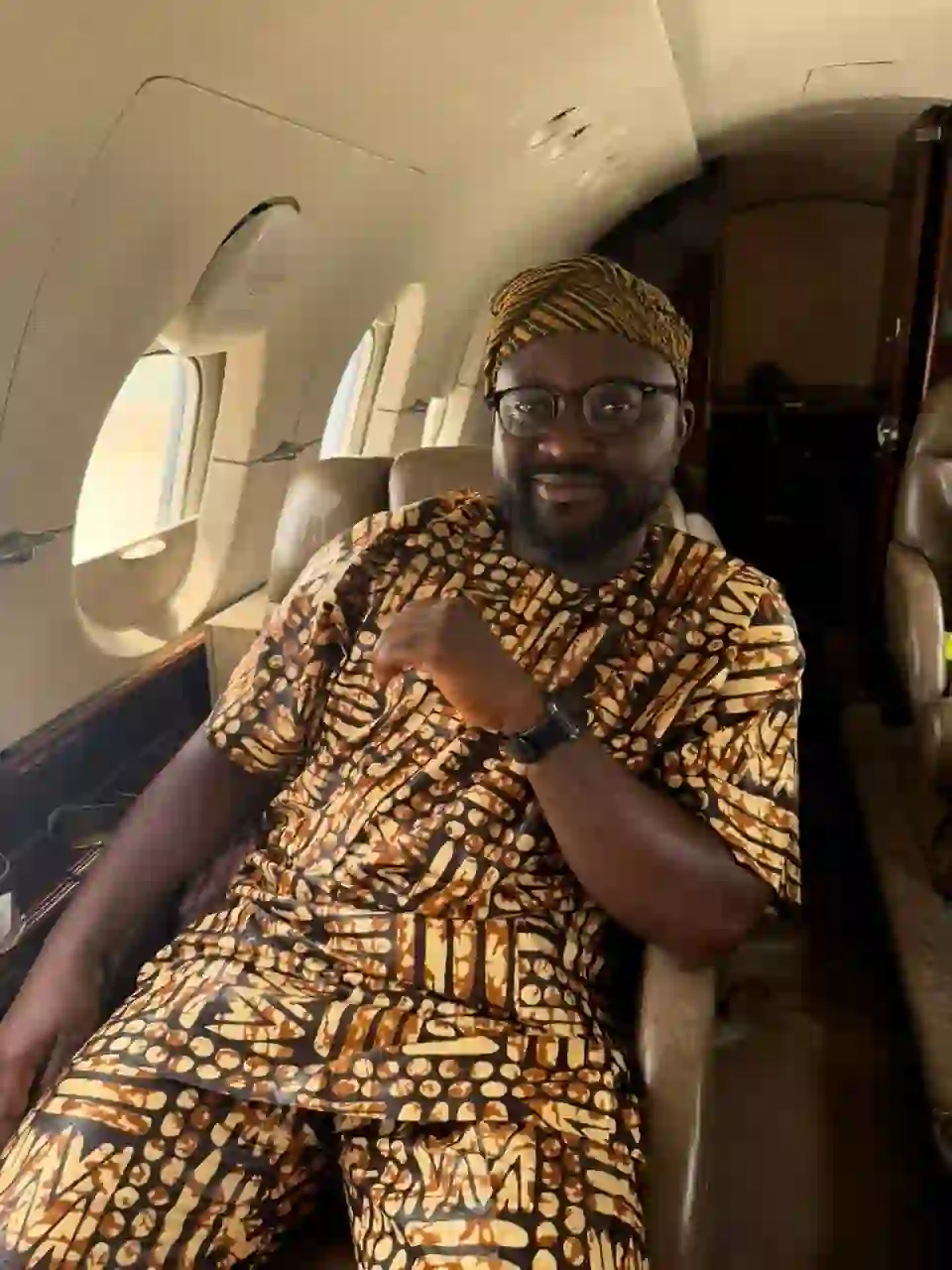
Osun Election: Vote Your Conscience – Yinka Rahman


Media consultant and public affairs practitioner, Rahman Olayinka, has urged eligible voters in Osun State to reject inducements and vote according to their conscience ahead of the August 15 governorship election.


Olayinka, an indigene of Osun, said the future of the state depends on the choices voters make at the polls, stressing that elections provide citizens with an opportunity to determine the direction of governance.

He advised the electorate to assess candidates based on competence, integrity and their commitment to the development of the state rather than temporary incentives or partisan considerations.


“The power to shape the future of Osun lies in the hands of the electorate. This is not the time to be influenced by temporary incentives or partisan sentiments. Vote your conscience and choose leaders who have demonstrated capacity, credibility and a genuine commitment to the development of our state,” he said.


He maintained that good governance can only emerge when leaders are elected through informed and independent decisions, not through vote-buying, intimidation or other undemocratic practices.


Olayinka also called on political parties and their supporters to conduct themselves peacefully and place the interest of the state above personal or political ambitions throughout the electoral process.


He encouraged youths, women and first-time voters to participate actively in the election, describing their involvement as vital to strengthening democracy and promoting inclusive governance.


He also urged electoral officials, security agencies and other stakeholders to ensure a free, fair and transparent election, while calling on residents to remain peaceful before, during and after the poll.

Before Producers Blame Sabotage, Ask How Much They Spent on Promotion By Kamal Rahman


Nollywood movie producers spend huge amounts of money on movie production, from casting top actors and actresses, hiring directors and crew members, renting expensive equipment, and post-production processes.


However, when it comes to promotion, that is where many producers suddenly draw the line.


The harsh reality is that no matter how good a movie is, people cannot watch what they do not know exists. Yet many producers allocate only a fraction of their production budget to marketing and publicity. Then, when the movie struggles at the box office, they rush to social media claiming sabotage, blaming cinemas, or even fellow filmmakers for their poor performance.


The truth is that most movies are not sabotaged; they are simply under-promoted.


Hollywood understood this decades ago. Studios often spend as much on marketing as they spend on production because they know visibility drives sales. A great film without awareness is like opening a shop in the middle of a forest and expecting customers to find it.


Take blockbuster films like Avatar. Beyond the massive production budget, billions of impressions were generated through aggressive marketing campaigns, partnerships, media tours, interviews, outdoor advertising, digital campaigns, and strategic publicity. The result was a record-breaking opening weekend that set the tone for its historic box office run.


The same can be said for major studio releases from companies like Disney, Universal, and Warner Bros. Their first-week performance is rarely accidental. It is usually the result of months of carefully planned promotion designed to build anticipation long before release day.


Even within Nigeria, some of the highest-grossing films have benefited from intentional and aggressive marketing campaigns.

Unfortunately, many producers now believe that posting a few skits, dancing on TikTok, creating artificial controversies, or crying online about alleged sabotage is a substitute for a proper marketing strategy. It is not.


Marketing is not an afterthought. It is part of filmmaking. A producer who spends ₦300 million making a movie but allocates ₦10 million to promotion should not be surprised when cinema attendance falls below expectations.


The audience owes no producer sympathy. Their responsibility is to spend money on entertainment that captures their attention. It is the responsibility of the producer to ensure the movie reaches the audience through effective publicity and strategic promotion.


If producers continue to spend less on proper promotion and choose the easy route which is clowning and dancing on social media, they will continue to cry about not getting sales.


Football, Hope and Rehabilitation: UCTEN Supports Inmates at Ibara Custodial Centre

Abeokuta, Ogun State – June 11, 2026


The Urban Community Transformation and Empowerment Network (UCTEN) has reaffirmed its commitment to rehabilitation, social inclusion, and community development by participating in the grand finale of a football tournament held at the Ibara Medium Security Custodial Centre, Abeokuta.


The organization attended the event following a special invitation from the Ogun State Command of the Nigerian Correctional Service, which sought the support of stakeholders and civil society organizations in encouraging inmates and promoting rehabilitation through sports.


The football final, held on Thursday, June 11, 2026, featured an exciting contest between the Inmates Football Team and Correctional FC. In a thrilling display of skill and determination, the inmates emerged victorious with an impressive 5–2 win.


The event attracted senior officials of the Nigerian Correctional Service, including the Controller of Corrections, Ogun State Command, CC Abioye Kamoru Adesina, the Officer-in-Charge of the Ibara Medium Security Custodial Centre, and the Command's Public Relations Officer, CSC Odukoya Owolola O., alongside other correctional officers, invited guests, and stakeholders.


Speaking with journalists after the match, UCTEN President, Dr. Hafiz Bello, stated that the organization's presence was in response to the invitation extended by the correctional authorities and formed part of its commitment to supporting programmes that foster rehabilitation and positive social transformation.


According to him, inmates should not be viewed solely through the lens of their mistakes but as individuals capable of positive change when given the necessary support and opportunities. He noted that correctional centres play a vital role in reforming, rehabilitating, and preparing inmates for productive and responsible lives after their release.


Dr. Bello emphasized that UCTEN remains dedicated to initiatives that promote youth empowerment, social development, education, mentorship, and community engagement. He added that the organization strongly believes in second chances and will continue to support efforts aimed at helping individuals rebuild their lives and contribute meaningfully to society.


He also commended the leadership of the Ogun State Command of the Nigerian Correctional Service, particularly CC Abioye Kamoru Adesina, and the management of the Ibara Medium Security Custodial Centre for their unwavering commitment to inmate welfare and rehabilitation. He praised the use of sports and educational programmes as effective tools for building discipline, confidence, teamwork, and personal development among inmates.


Also interacting with inmates during the event, the Financial Secretary of UCTEN, Mr. Adeyinka Adesina, encouraged them to maintain good conduct, embrace rehabilitation opportunities available within the facility, and remain hopeful about their future. He urged them to make the most of programmes designed to equip them with the skills and knowledge needed for successful reintegration into society.


UCTEN has maintained a longstanding relationship with the correctional centre and has actively participated in several developmental and rehabilitative initiatives within the facility over the years. One of such interventions was its participation in the matriculation ceremony of 58 inmates enrolled in the National Open University of Nigeria (NOUN) programme, including two postgraduate students. The educational initiative continues to provide inmates with access to higher learning and improved prospects after their release.


At the conclusion of the tournament, UCTEN further demonstrated its support for positive engagement and excellence by presenting cash prizes to outstanding participants. Awards were given to the Best Male Team, Best Female Team, Best Male Player, Best Female Player, and Best Female Defender of the tournament.


The organization also reiterated its readiness to continue partnering with correctional authorities in advancing programmes focused on education, sports development, skills acquisition, rehabilitation, and inmate welfare.


The UCTEN delegation was led by its President, Dr. Hafiz Bello, and included members of the Executive Committee such as the Financial Secretary, Mr. Adeyinka Adesina, and the Welfare Officer, Mr. Adewole Olaogun. Other members of the delegation were Mr. Sofela Abayomi Oluwaseun, Mr. Adebanjo Kehinde, Mr. Sodree Ajasa Ogunsolu, and Mr. Kunle Bamgbose.


The successful tournament once again highlighted the power of sports as a valuable instrument for rehabilitation, personal development, social inclusion, and positive behavioural change. It also underscored the importance of collaboration between government institutions, civil society organizations, and community stakeholders in supporting the reformation and reintegration of inmates.


For UCTEN, the visit was another demonstration of its mission to transform lives, empower individuals, and contribute to building a more inclusive and compassionate society where every individual is given an opportunity to become a better citizen.


Urban Community Transformation and Empowerment Network (UCTEN) is open for collaborations and partnerships.


Contact: 07065857477, 08168214244, 08142382978.

WHEN A SINGLE SENTENCE OVERSHADOWS MILES OF ASPHALT By Rahman Olayinka


Politics often reveals an uncomfortable truth about human nature: we remember words faster than we remember works.


In the last few days, Governor Ademola Adeleke found himself at the centre of a storm after a viral video captured him describing Iwo as a village and suggesting that his administration’s road dualisation projects had ushered in a new wave of civilisation.


For some indigenes of Iwo, the statement landed like a wound. To others, it was merely an off-the-cuff remark that should not eclipse years of public service.


But perhaps the bigger question is this: Should one statement erase an entire record of governance?


I am from Iwo.


And I say this with a clear conscience: criticism is healthy in a democracy, but gratitude should not become a casualty of emotion.


Can a single sentence write off a man many have described as accessible, generous and deeply connected to the people he governs?


I work in the aviation industry. On several occasions when Governor Adeleke has passed through the airport, I have watched from a professional distance. Beyond the cameras and the political colours, I have seen humility. I have witnessed comradeship. I have observed confidence without arrogance, generosity without spectacle, and a sincere affection for the people of Osun State.


These are personal observations, not political endorsements.


Truthfully, I was never among Governor Adeleke’s earliest admirers. Like many Nigerians, I watched cautiously from the sidelines.


Then, a few weeks ago during the Sallah celebration, I travelled home to Iwo.


Something unexpected happened.


I missed my way.


The Iwo I thought I knew had changed.


Roads had expanded. New projects had altered familiar landmarks. Areas once associated with congestion and neglect now carried signs of deliberate planning. It felt as though the town had quietly begun rewriting its own story.


The same Iwo that has dominated conversations because of a controversial statement has also witnessed the construction of its first-ever dual carriageway, stretching through strategic parts of the town. Government records indicate that the administration approved the dualisation of the Adeeke–Odo Ori corridor in phases, linking major commercial and residential districts. (Radio Nigeria Ibadan⁠)


Beyond that, officials have highlighted the expansion of Iwo’s central business district, ongoing rehabilitation of the Iwo Waterworks, reconstruction of internal roads, upgrades to healthcare infrastructure, the rebuilding of Adeeke Bridge, and the provision of boreholes across communities. (Osun State Official Website⁠)


Outside Iwo, the Adeleke administration has embarked on major road projects across Osun State, including dualisation initiatives and strategic flyover constructions aimed at improving connectivity and stimulating economic activity. (Osun Spring⁠)


This does not mean the governor is beyond criticism.


No leader is.


Citizens have every constitutional right to challenge public officials, question their words and demand accountability. That is the essence of democracy.


However, fairness demands that we judge leaders in the totality of their actions rather than in the heat of a single viral moment.


History is filled with statesmen who occasionally miss the mark with their words, yet leave behind enduring legacies through their works.


The people of Osun are wise enough to separate disappointment from destruction.


I do not believe this episode will diminish the affection many hold for Governor Adeleke. Neither do I think it should prevent constructive conversations about how leaders communicate with the communities they serve.


As for me, I choose to evaluate both the man and the milestones.


If I were to rank governors based on visible impact and my personal observations, Governor Babajide Sanwo-Olu of Lagos would occupy the first position. Governor Ademola Adeleke would come immediately after.


That is my opinion.


I express it freely, not as a partisan actor, but as a Nigerian exercising the constitutional right to freedom of expression.


After all, roads can be measured in kilometres.


But fairness is measured in conscience.


Rahman Olayinka

Public Affairs Person

Ibadan Airport: SLAA Manager Sends Strong Warning to Illegal Waste Dumpers as Airport Marks 2026 World Environment Day


The Airport Manager of Samuel Ladoke Akintola Airport (SLAA), Ibadan, Mr. Oluwagbemiga Afuwape, has issued a stern warning against indiscriminate waste disposal within and around the airport environment, stressing that environmental cleanliness remains a collective responsibility that must not be compromised.


Mr. Afuwape gave the warning on Wednesday during activities marking the 2026 World Environment Day celebration held at the airport’s Fire Bay in Ibadan.


Addressing members of staff and stakeholders at the event, the Airport Manager condemned the activities of illegal waste dumpers, noting that such practices pose serious environmental and safety concerns, particularly within critical infrastructure such as airports.


He urged residents, airport users and members of the host communities to desist from dumping refuse indiscriminately and embrace proper waste management practices.


According to him, maintaining a clean and healthy environment is essential to safeguarding lives and ensuring the smooth operation of airport activities.


He also called on staff and participants to develop the habit of picking up litter whenever they come across it, emphasizing that environmental protection should not be left to government agencies alone.


“Every individual has a role to play in keeping our environment clean and safe. We must all cultivate the habit of protecting our surroundings for the benefit of present and future generations,” he said.


The Airport Manager reiterated the management’s commitment to promoting environmental sustainability and ensuring that the airport remains a model of cleanliness and environmental responsibility.


The World Environment Day celebration served as a platform to renew calls for climate action and responsible environmental practices among airport stakeholders and the larger community.

Is Atiku Abubakar, Nigeria’s Last Hope, Afraid of Tinubu? By Kamal Rahman


In a time when Nigeria is grappling with economic hardship, insecurity, and widespread frustration, many citizens are looking toward the opposition for direction, leadership, and perhaps most importantlycourage. At the center of this expectation is Atiku Abubakar, often seen as the leading figure in the opposition. But recent developments raise a troubling question, where exactly is he when the country needs a loud, consistent voice?


Nigeria today faces realities that are difficult to ignore. Fuel prices have climbed to nearly 1,400 per litre, power supply remains unreliable across the nation, and insecurity continues to claim lives particularly in the North, Atikus own region. In moments like these, citizens naturally expect opposition leaders to speak up, mobilize, and challenge the status quo.


Yet,Waziri Atiku has appeared unusually quiet.


At a time when many expected strong statements, organized resistance, or even symbolic actions like protests, there has been little to suggest visible, consistent engagement from him. His recent trip to Mecca for pilgrimage, though personally significant, came at a time when many Nigerians felt the country was on fire.” To critics, it reinforced the perception of distance rather than urgency.


This silence becomes even more striking when contrasted with the political style of President Bola Ahmed Tinubu during his years in opposition. Long before he became president, Tinubu was a constant presence in national discourse. He didnt just criticize the government of Former President Goodluck Jonathanhe persistently challenged it. Through statements, mobilization, and coalition-building, Tinubu and his allies applied pressure that ultimately contributed to a historic shift in power.


Ironically, Atiku himself was part of that coalition that led to the rise of the All Progressives Congress. That movement demonstrated the effectiveness of a united, vocal opposition. It showed that power doesnt just change through electionsit shifts through sustained pressure, visibility, and strategic engagement.


Which brings us to the present reality. If Atiku was part of that successful opposition playbook, why does it now seem absent in his current political approach? Why does the opposition, particularly within platforms like the African Democratic Congress, appear less coordinated and less forceful?


This leads to a more uncomfortable questionone that many Nigerians are beginning to ask: is Atiku holding back out of caution, or is there something deeper? Could it be that he is reluctant to directly confront Tinubu? Or is his silence a reflection of a long-standing relationship between both men, one that tempers political aggression?


Politics, after all, is not just about rivalry, it is also about alliances, history, and personal connections. Atiku and Tinubu have operated within overlapping political circles for decades. It is possible that this familiarity breeds restraint. But in times of national difficulty, should personal history outweigh public responsibility?


Ultimately, leadershiespecially in opposition is measured not just by ambition, but by action. Nigerians are not merely looking for candidates; they are looking for advocates. Voices that will echo their struggles, challenge authority, and present clear alternatives.


If Atiku Abubakar hopes to be seen as a viable solution for Nigerias future, then silence may not be an option. The moment demands more presence, more courage, and more visible leadership.


Because in the end, the question is not just whether he is the man to save Nigeria but whether he is willing to fight for it now.

Osun State: The Circus That Has Failed to Be Liberated from a Jester By Kamal Rahman

Let me begin by commending President Bola Ahmed Tinubu for allowing the people of Osun State to exercise their democratic rights and determi...